
How Trump’s Greenland Plan Is Changing Europe’s Politics
Jan 26,2026
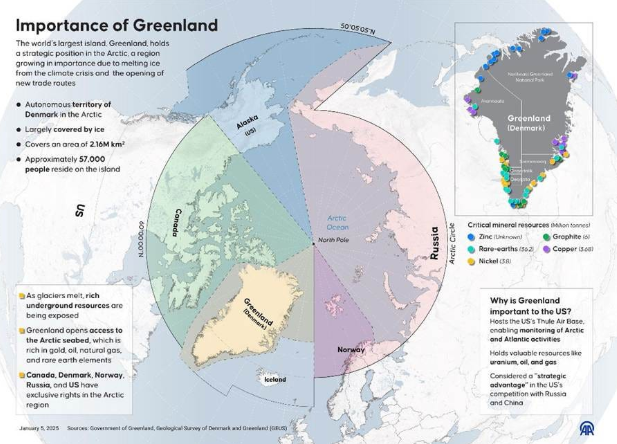
This map shows Greenland, a huge Arctic island that is becoming more important for world security and politics because of its location between North America and Europe and its role in defense and resources.
What Trump Wanted and Why
In 2025 and 2026, former U.S. President Donald J. Trump made headlines again by saying that the United States should gain control of Greenland, a huge Arctic island that is part of the Kingdom of Denmark. Trump insisted that “ [They] need Greenland for a national security situation [and that] it's so strategic. Right now, Greenland is covered with Russian and Chinese ships all over the place” (Euro News). However, many people in Europe saw this idea as strange and threatening. Danish Prime Minister Mette Frederiksen responded by saying “We can negotiate anything... But we cannot negotiate our very fundamental values, sovereignty, the identity of our countries and our borders. Our democracy.” (MSN), strongly defending the island’s independence and laws. The U.S. and Europe have cooperated in NATO for decades, but this push tested old friendships and caused concern among leaders across the continent.

European Commission President Ursula von der Leyen warns that trying to pressure Europe over Greenland could hurt friendships and stresses that Europe must work together with allies.
Europe’s Reaction to the Greenland Plan
Many European countries reacted with unanimous criticism when Trump repeated his interest in Greenland in early 2026. Leaders from the European Union, including President Ursula von der Leyen, openly condemned the proposal, calling threats of tariffs a mistake and warning they would defend European sovereignty. French President Emmanuel Macron said “tariff threats are unacceptable and have no place in this context. Europeans will respond to them in a united and coordinated manner if they were to be confirmed. We will know how to uphold European sovereignty” (ABC News). The unified stance showed that Europe would push back against leadership tactics that seemed to challenge international law and shared governance systems in the Atlantic region. Even some far right parties in Europe, which sometimes agree with Trump on other issues, called the Greenland plan hostile and a harmful form of intervention. These reactions revealed how Trump’s Greenland push strengthened European unity rather than weakening it.
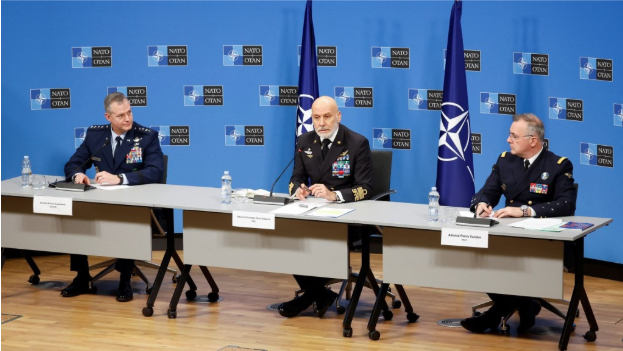
Leaders at a NATO meeting are focusing on defending the Arctic region, including Greenland, because tensions with the U.S. over Trump’s plan have made European countries think more about their own security.
How Europe and the U.S. Are Adjusting
By early 2026, the controversy had influenced both European policy and U.S. Europe diplomacy. After strong pushback from Denmark, the EU, and NATO partners, Trump softened his stance and said the U.S. would not use force to take Greenland. Instead, both sides discussed a framework of a future deal to cooperate on Arctic security and defense without changing ownership. Even though Trump described this outcome as positive, many European officials said they did not view the retreat as a full victory for trust, warning that relations may be less predictable in the future. The Greenland episode encouraged European nations to think more about strategic autonomy, the ability to protect their own interests without relying only on outside powers. This could reshape how Europe and the U.S. work together on global security in coming years.



Comments